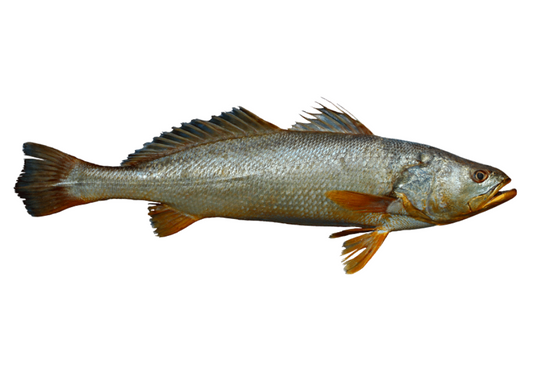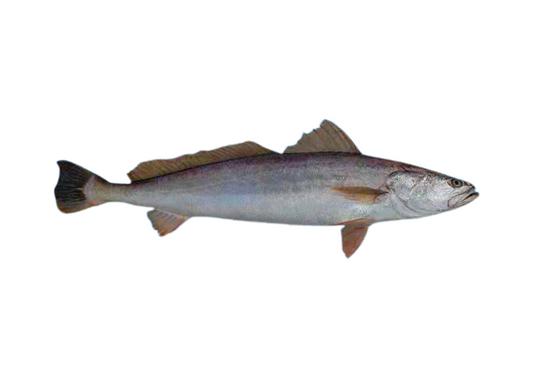

Among the many fish species we have, the lambari (also known as piaba) and the traíra are undoubtedly the ones that evoke the most emotional memories in a large part of Brazilians. We have already posted here on the Blog about the cultural significance and economic importance of tainha (mullet) for some riverside communities (click here). There's also pirarucu for the Amazon region, manjubinha for the southeastern coast, ginga for the northeastern coast, piraputanga for the Pantanal, but..., it's very likely that lambari and traíra surpass all these species.
The fact that they are present in all hydrographic basins and in all states of Brazil, including in brackish water rivers, helps a lot. However, it is the peculiar characteristics of these species that have imprinted emotional memories on many people. Oh, except for those who have had the misfortune of being bitten by the traíra's sharp teeth. In that case, the memory is certainly not a good one.
Why do so many people have fond memories of lambari and traíra?
In the case of the lambari, always abundant in rivers, streams, and lagoons, there's a high chance it was the first fish caught as a child, usually at a grandparent's, uncle's, or close relative's farm. Whether with a bamboo rod equipped with line and hook, a net, or even a fish trap, lambari fishing was always a fun activity.
As for the traíra, it's more about the unique flavor of its meat, coupled with the ritual of night fishing followed by immediate preparation and consumption, always accompanied by a beautiful pink or clove lemon.
And there's also the combined memory, where lambari fishing was done to then use them as bait for traíra fishing. In the end, there were always some left over, and that's when you'd have a lambari + traíra fry-up.
Are lambari and traíra good to eat? What are the characteristics of the meat of these fish?
It may not seem like it, but lambari meat is rich in lipids. But it's a flavorful fat, as it has a balanced ratio of omega-3 and omega-6 fatty acids. In fact, "lambari oil" is widely used in the culture and medicine of some indigenous tribes. There is a tradition among indigenous people to catch lambaris during piracema (spawning season), when catching them is easy and they are "fatter," then boil them in large cans and, with a kind of ladle, remove the "foam" that forms on the surface. Afterward, this "foam," which is actually a mixture of fat + water, is refined over low heat in a smaller container. The water evaporates, leaving pure lambari oil. This oil is carefully stored to be used both in cooking and in indigenous medicine. This is a good indication of how rich lambari fat is.
How to prepare Lambari?
Lambari yields little meat, so the main way to prepare it is whole, breaded in wheat flour or cornmeal and then fried in hot oil. For those who enjoy cachaça or beer, it's a perfect combination.
Learn more about Lambari

How to prepare Traíra?
Traíra, on the other hand, has extremely lean meat. It's difficult to even find the so-called abdominal fat in traíra, which is quite common in other species. This is due to the fact that traíras have a low energy cost for their survival. In addition to preferring calm waters, the traíra is a fish that spends most of its time motionless at the bottom. It only expends energy for short displacements or to ambush its prey. Even then, it's a short lunge, as it is a lurking carnivore that camouflages itself among logs or at the bottom of lagoons, waiting for its prey to pass right in front of it.
Lean, very white meat with a distinctive flavor. But there's a catch: many bones. Even so, its unique flavor prevails, and whoever tries it once usually wants to try it again. After all, it's relatively easy to overcome the bone problem, using the technique of cutting it into thin steaks or cutting it into large steaks and then "ticking" (cutting into thinner slices) to break the bones.
Learn more about Traíra
Are lambari and traíra cultivated species?
In the case of lambari, yes. There are already well-defined protocols for both laboratory reproduction and cultivation techniques. They can be commercially raised in excavated earthen ponds, in net cages installed in large reservoirs, or in elevated tanks equipped with a recirculating aquaculture system (RAS). Currently, most lambari production is destined for the live bait market for sport fishing. But the snack market is growing, and there's even a machine for gutting lambari.
In the case of traíra, as it is a territorial carnivore, there is no specific commercial cultivation. It is common to find some traíras during harvesting in pacu, tilapia, pintado, among other species, but it ends up being an "accidental cultivation." Surely more than 95% of the traíras consumed in bars and restaurants come from commercial fishing.
Curiosities:
A curiosity about the word “traíra”: As a carnivorous fish that prefers shadowy places and has nocturnal habits, the term “traíra” is also used as slang in Brazil to refer to treacherous people, who act in the shadows and stealthily to betray or harm colleagues.
A curiosity about the lambari: As a species with a high fecundity rate, a rapid cycle, and good adaptation to laboratory conditions, it is a species widely used in scientific research for different purposes. From toxicological tests to experiments involving "surrogacy," where, through a process known as "mediated propagation," researchers take reproductive cells from other species and transplant them into the lambari. Surprisingly, these cells adapt to the lambari's body, develop, and produce sperm and eggs from the material implanted in it.
Curiosity about traíras and lambaris: When a new lagoon forms in the countryside, either through a spring or a long rainy season, lambaris and traíras are the first to inhabit this new environment. This is due to the fact that the eggs of these species are adhesive. And then aquatic birds, especially herons, end up carrying the eggs from one place to another.