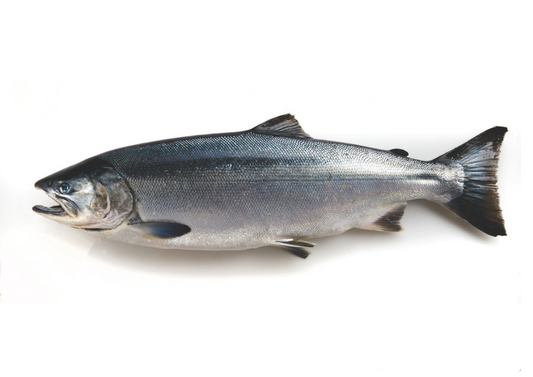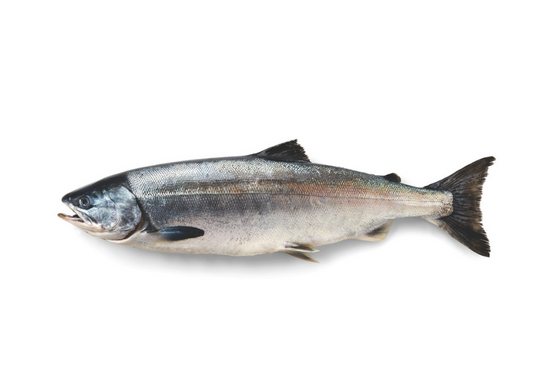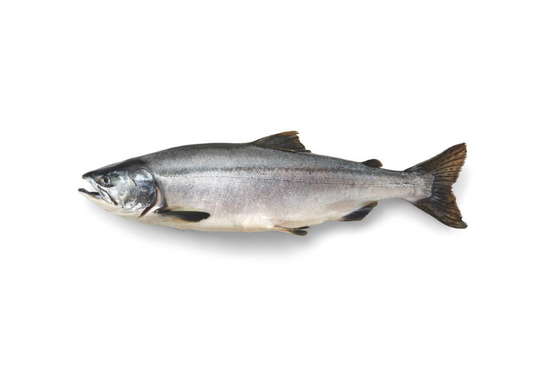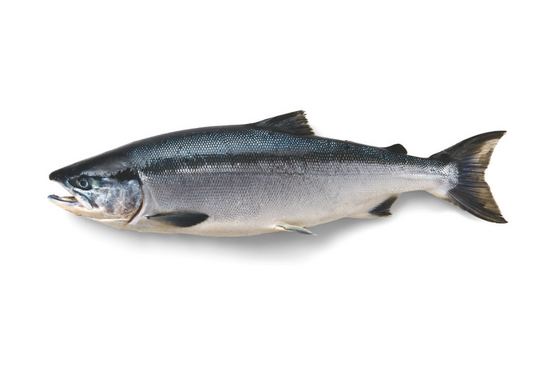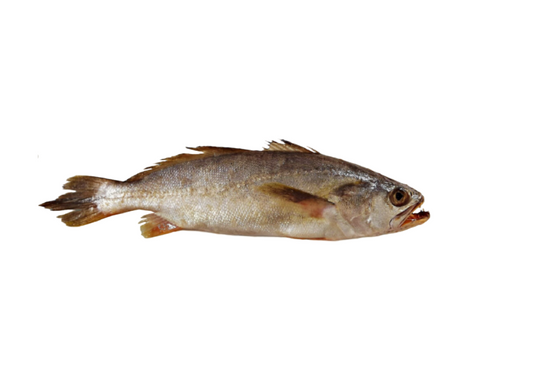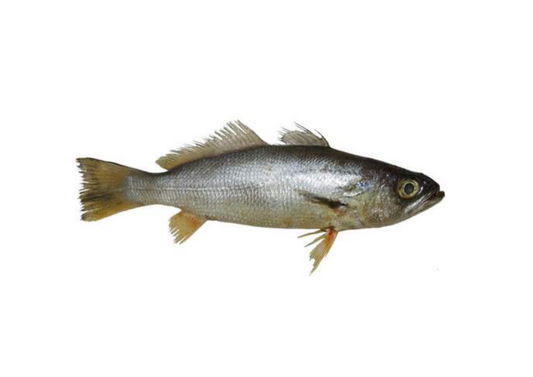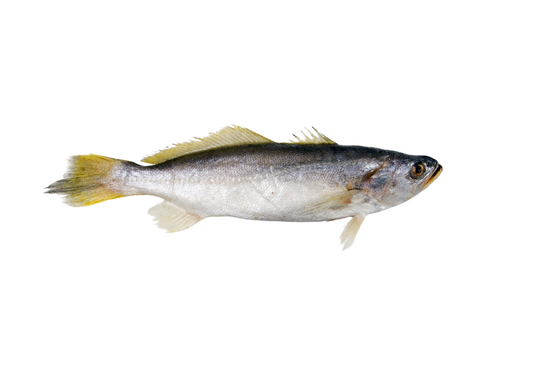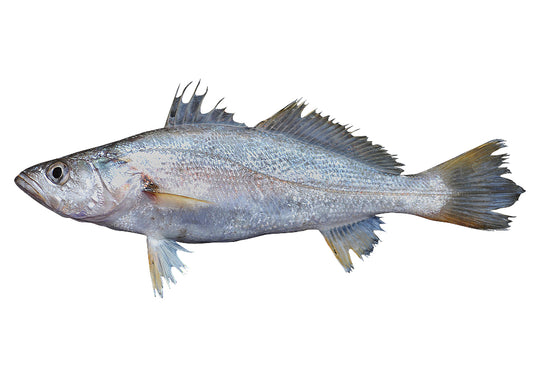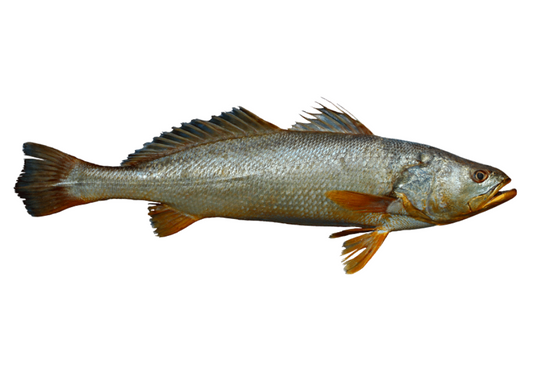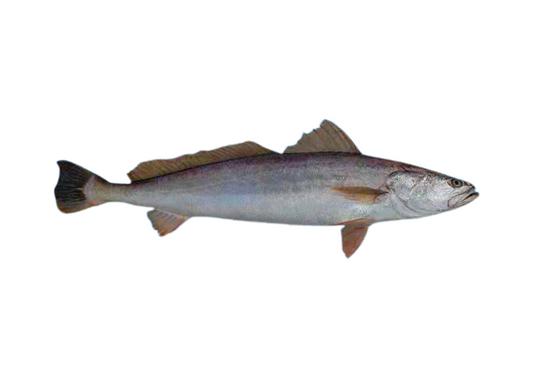

If you're a fan of fish, weakfish is probably among your favorites. Whether at a seafood restaurant or a buffet-style eatery, seeing weakfish on the menu always brings a sense of satisfaction. But with so many varieties like Yellow Weakfish, Cambucu Weakfish, Gó Weakfish, and White Weakfish, the question arises: who is who in this story? And do you really know which weakfish is your favorite?
With this in mind, FishCode is launching the "Unraveling Weakfish" series to finally clarify all doubts about the different weakfish species. We know the task is challenging, but we have the help of two specialists (FishCode experts) to unravel these mysteries.
Oceanographer Cintia Miyaji, a reference in fish sustainability in Brazil, will be responsible for all the technical aspects. Cintia has the talent to transform complex (and sometimes a bit boring 😅) content into accessible, pleasant, and practical information for us, consumers. When it comes to flavor, texture, and recipes, we are privileged to count on Chef Pedro Bichir, who, besides his great talent, is truly passionate about the sea and the enigmas of fish nomenclature.
Watch the series launch video here:
Unraveling Weakfish
By: Cintia Miyaji
In addition to denoting that brief nap one takes when very sleepy, the term Weakfish can refer to various fish, especially from the Sciaenidae family, mostly of the genus Cynoscion. And note: in Portugal, the name Pescada (Weakfish) is applied to fish from the hake family!
The Sciaenidae family includes fish known in English as drums and croakers, names that refer to their ability and diversity in producing sounds, mainly used for communication between individuals in situations related to spawning, feeding, and/or aggressive behavior. The sounds are produced by the contraction of muscles that make the swim bladder wall vibrate, an organ related to the control of fish buoyancy.
Most members of the Sciaenidae family live near muddy or sandy bottoms in shallow waters and are voracious predators of small fish and invertebrates, and for this reason, they have well-developed and sharp canine teeth. They make up an important fraction of trawl and bottom-gillnet catches, and practically all of them make excellent culinary preparations. Its most famous and consumed representative in Brazil is not a Weakfish, but its cousin, the Corvina (Micropogonias furnieri).
The body of a sciaenid has a typical fish shape: elongated with extremities narrower than the center, and moderately compressed, meaning flattened laterally. The dorsal fin is quite elongated, and its anterior part, which has spines, is separated from the soft posterior part by a pronounced groove. The pelvic fins are positioned below the pectoral fins, and the anal fin has one or two spines.

As they do not have many distinctive external characteristics that allow for easy recognition and separation between species, these fish have accumulated various regional common names. Due to their economic importance and the consequent need for adequate data collection for each species to support fisheries management of their respective stocks, many attempts have been made to establish an "official" nomenclature for weakfish. But, apparently, they have all failed miserably so far... Regional popular names number in the dozens for a single species, and the name Weakfish can be commercially applied to any of the species of the genus Cynoscion, according to MAPA Ordinance No570, of March 23, 2023, which establishes the correlation between common and scientific names to be adopted for inspected products destined for national trade.
But why does correct species identification matter to the end consumer?
- Because without knowing who is who, we will hardly know when, where, and how it was fished, and thus, we will not have enough data to prevent a species that is being overfished from being protected and having its stock recovered;
- Without it, the exchange of more valued species for more common species becomes economic fraud, which, in addition to deceiving the customer, generates unfair competition among sellers;
- Without it, we can be tricked into consuming a species caught illegally (during the closed season, for example);
- Without knowing the species, we can consume species brought from afar and thus lose the chance to encourage the consumption of local species, valuing the fishermen of our region.

In this photo, taken in a very busy fish market, we observe the indiscriminate use of common names.
A well-informed consumer is one of the main drivers of change in conscious fish consumption. To ensure that resources are extracted from the seas, rivers, and lakes sustainably, we need qualified demand that requires transparency in the supply chain from producers and retailers.
Since Brazilian legislation still does not require the correct specific identification of fish through labeling on frozen products, nor is there sufficient inspection of fresh whole or portioned fish sales, consumer knowledge about the species becomes essential.
Do you want to become a conscious consumer who makes the best use of fishery resources and is not deceived at the fishmonger or restaurant, always choosing the best preparation for the right Weakfish? Then come with us!