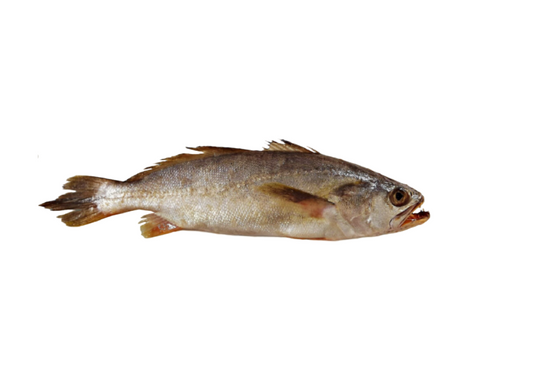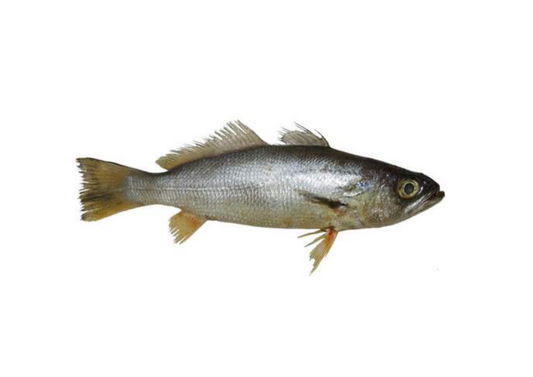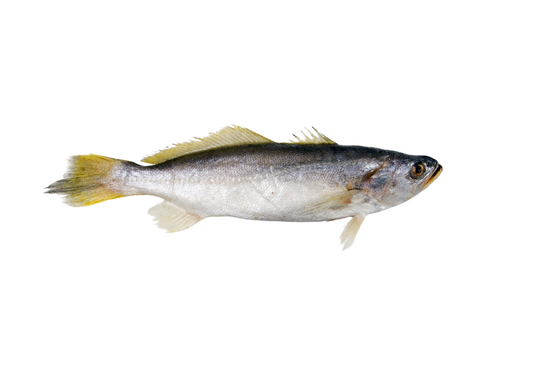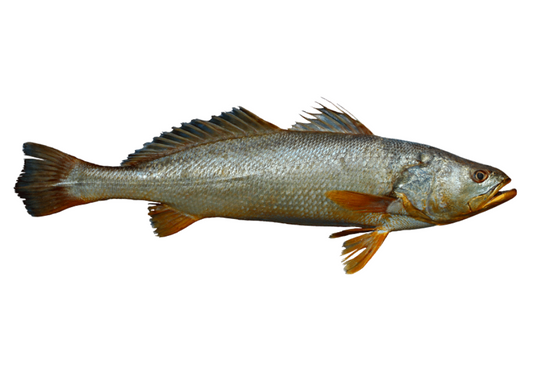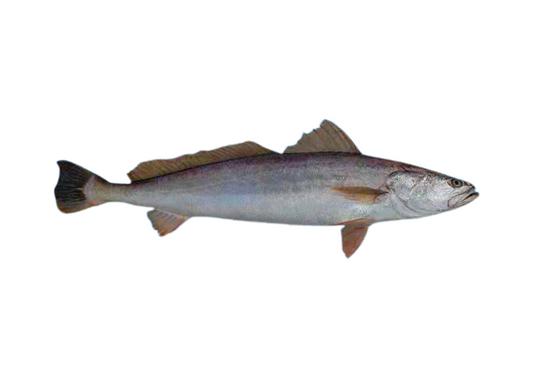

White Croaker - Cynoscion leiarchus
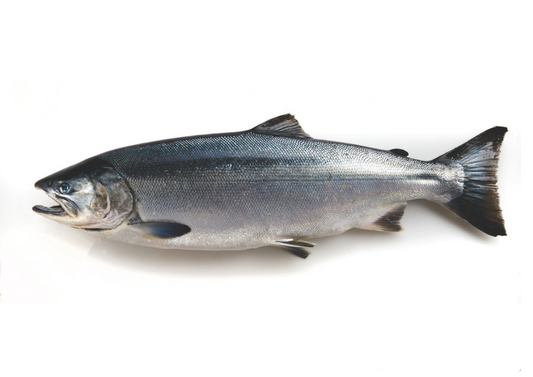
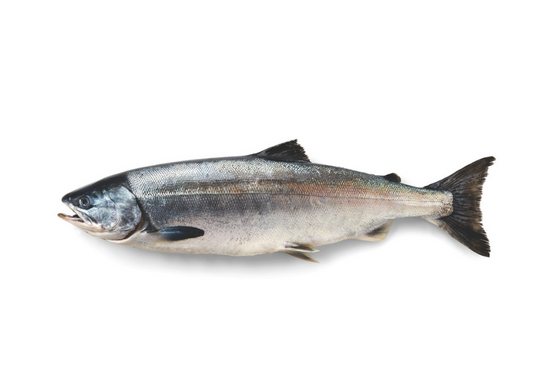
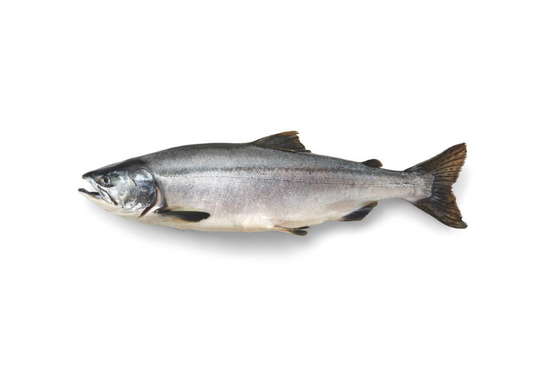
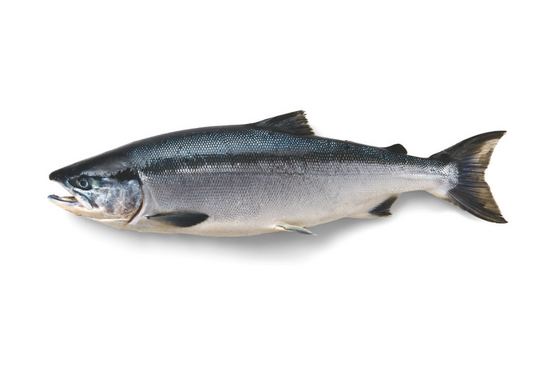
The white croaker is a fish known for its white, delicate, and flavorful flesh. Due to its sensitive texture, it is important to be careful with its preservation and when purchasing to avoid damage.
Key characteristics:
- Body shape: Tall and elongated.
- Average weight: Approximately 2 kg.
- Caudal fin: Straight, a distinctive feature of the species.
This fish is quite popular but often confused with other similar species.
Preparation tip:
Check out Chef Pedro Bichir's exclusive recipe for preparing grilled butterflied white croaker. It's an easy-to-make and extremely delicious dish!
Technical analysis:
Our specialist, Cintia Miyaji, shares technical details about the white croaker, helping to clarify doubts about this fish which, despite being common, can cause confusion due to its similarity with other species.
White Croaker
Scientific name: Cynoscion leiarchus (Cuvier, 1830)
FAO English name: Smooth weakfish
FAO Spanish name: Corvinata blanca
Common denomination for inspected products: Pescada, Pescada-Branca (note that the species Plagioscion squamosissimus, a freshwater and brackish cienid found in the Amazon, Paraná, Paraguay, and São Francisco river basins, also goes by this name)
Other common names: Corumbeba, Curumbeba, Curumbeva, Samucanga, Perna-de-Moça, Pescada-de-Rede, Pescada-do-Reino, Pescadinha-do-Reino.
The White Croaker occurs at depths of up to 50 meters in the Atlantic Ocean, from the Gulf of Mexico to the Southeast region of Brazil, on sandy or muddy bottoms. As it tolerates low water salinity, it frequently occurs in estuarine regions and coastal lagoons.
It is a medium-sized croaker, reaching up to 70 cm in length and 2 kg, but generally has a commercial size of around 35 cm. Its coloration is silvery-gray, darker on the back and whitish on the belly.
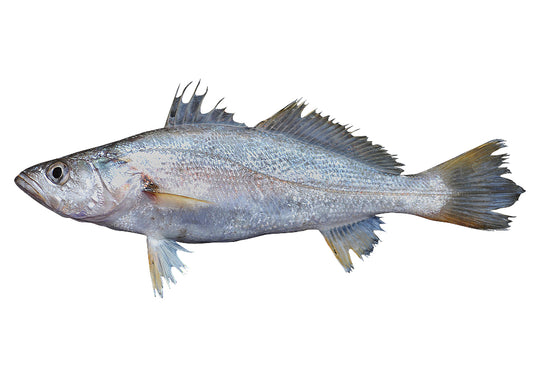
The characteristic that distinguishes it from more common croakers is the shape of the caudal fin, which is described as truncated, meaning it has an almost straight outer edge and darker edges, as does the posterior edge of the dorsal fin.

Cynoscion leiarchus with distinctive features highlighted. Adapted from https://www.fao.org/4/t0544s/t0544s00.htm
They form large schools, especially during the reproductive season, which is governed by water salinity and temperature. On the coast of São Paulo State, their landings reach the highest volumes in the winter months.
These are fast-growing animals with a short life cycle, which can make them vulnerable to intense fishing pressure. On the other hand, the high egg production per female ensures high resilience for populations if fishing is well-managed.
The White Croaker is not included in any list of threatened species, but as bottom fisheries can cause environmental impacts, threatening other species, the best purchasing option is for croakers caught by artisanal fisheries, whenever possible.